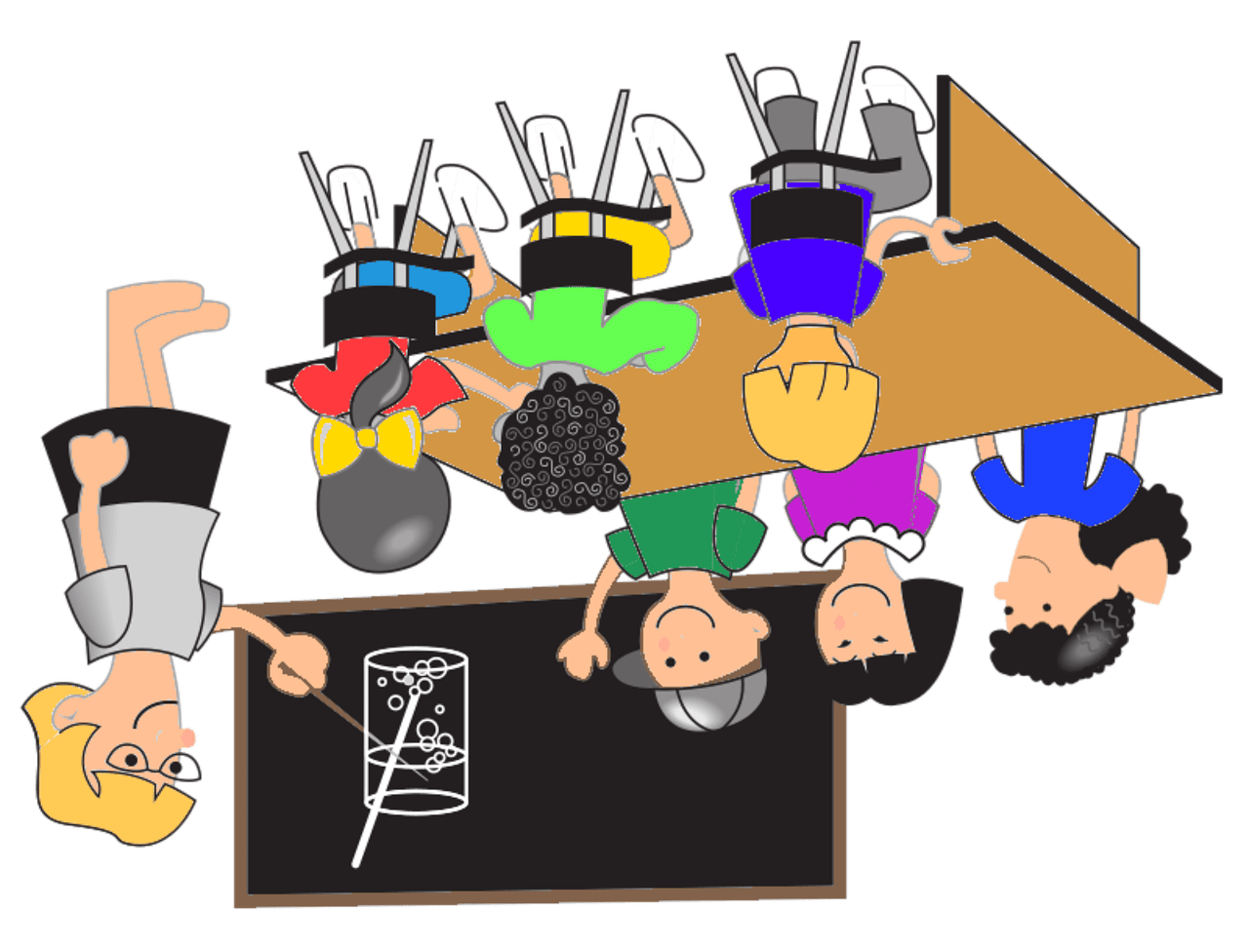
I first came across the concept of the Flipped Classroom when I took a Coursera MOOC last summer called Learning to Teach Online. While the term was new to me, the concept was not, since in a classroom environment where materials are made available to students via a learning management system (LMS) surely students are able to prepare for upcoming classes? (This differs from when I was an undergraduate back in the late 1980’s – acetates and slide projectors anyone!). In the number of years I’ve been teaching face to face groups I’ve always split the lesson into work to be done before class, during class and after class. In any group there is always a mix of those who will engage with the material beforehand but equally there are many who seem to operate a just-in-time approach or indeed are unaware that the material is available until they turn up to class!
At any rate, this year I decided to take a more formal approach to the flipped classroom since I now had a growing repository of tools under my belt for the creation of quizzes and other types of formative assessment so why not put it into practice? Some basic research took me to the website of the Higher Education Academy where flipped learning was defined in the following manner: flipped learning is a pedagogical approach in which the conventional notion of classroom-based learning is inverted, so that students are introduced to the learning material before class, with classroom time then being used to deepen understanding through discussion with peers and problem-solving activities facilitated by teachers. A proper, pedagogical approach was not what I was expecting but, great, I read on some more. The Faculty Innovation Centre at the University of Texas at Austin, created a short video that explains it simply: students gain necessary knowledge before class, and instructors guide students to actively and interactively clarify and apply that knowledge during class.
A flipped classroom involves splitting the classwork into three parts, let’s call them pre-class, during-class and post-class stages for simplicity’s sake. In the past I’ve used any number of case studies during class to encourage students to develop their own community of inquiry and collaboratively deliberate to respond to the case in question. For the most part it works well but does rely on physical presence during class. It is also fair to say that post-class, students are encouraged to apply their knowledge in a number of ways including summative assessments. So, what of the pre-classwork and how important is it in the flipped classroom environment?
From my recent experience it appears that students are enjoying the quizzes and the collaborative engagement that is part and parcel of it. However, as I walk round the room it is evident that few of the students have actually read the material on which the quiz was based and available to them before class. How do I know this? Well, having difficulty access the online resource in the university library might be a giveaway! Does this come as a surprise? No, I guess not, but perhaps it’s a little disappointing since the quality of the ensuing discussion would likely increase a level with pre-reading under the belt. Further work on student motivation and engagement with pre-class work is high on my list going forward.
An emerging benefit of this early experimentation with the flipped classroom is that there is a level of trust whereby students are able to have their mobile devices on during class and I’m hopeful that they’re not using them for purposes other than class activities!
This brief blog post (well, a bit longer than my usual target of 500-600 words) has not answered my title question ‘to flip or not to flip’ since it appears that with the use of LMS in the classroom an element of flipping is already in place. I think there is opportunity to encourage student engagement in pre-classwork that will result in improvements during and post-class but that is likely the bones of another post with more reading to do beforehand!
Featured image courtesy of: https://pixabay.com/en/blackboard-boys-chalkboard-children-1299841/
References:
Flipped Learning, The Higher Education Academy, 18 May, 2017. Retrieved 28 February 2018.
Reidsema, C. et al., 2017. The Flipped Classroom Practice and Practices in Higher Education, Springer.
Hao, Y., 2016. Exploring undergraduates’ perspectives and flipped learning readiness in their flipped classrooms. Computers in Human Behavior, 59, pp.82–92.
 Sandra Flynn
One thought on “To flip or not to flip?”