Part of this week’s PACT homework involves digging into the national PD Framework (for all staff who teach in higher education). I love the ‘all staff‘ focus since it certainly helps with the identity crisis that regularly hits me – but that’s a post for another day since we have a 250 word limit on this artefact. Yes, I know I’m being boring by creating yet another blog post, but I don’t feel much like being creative today.
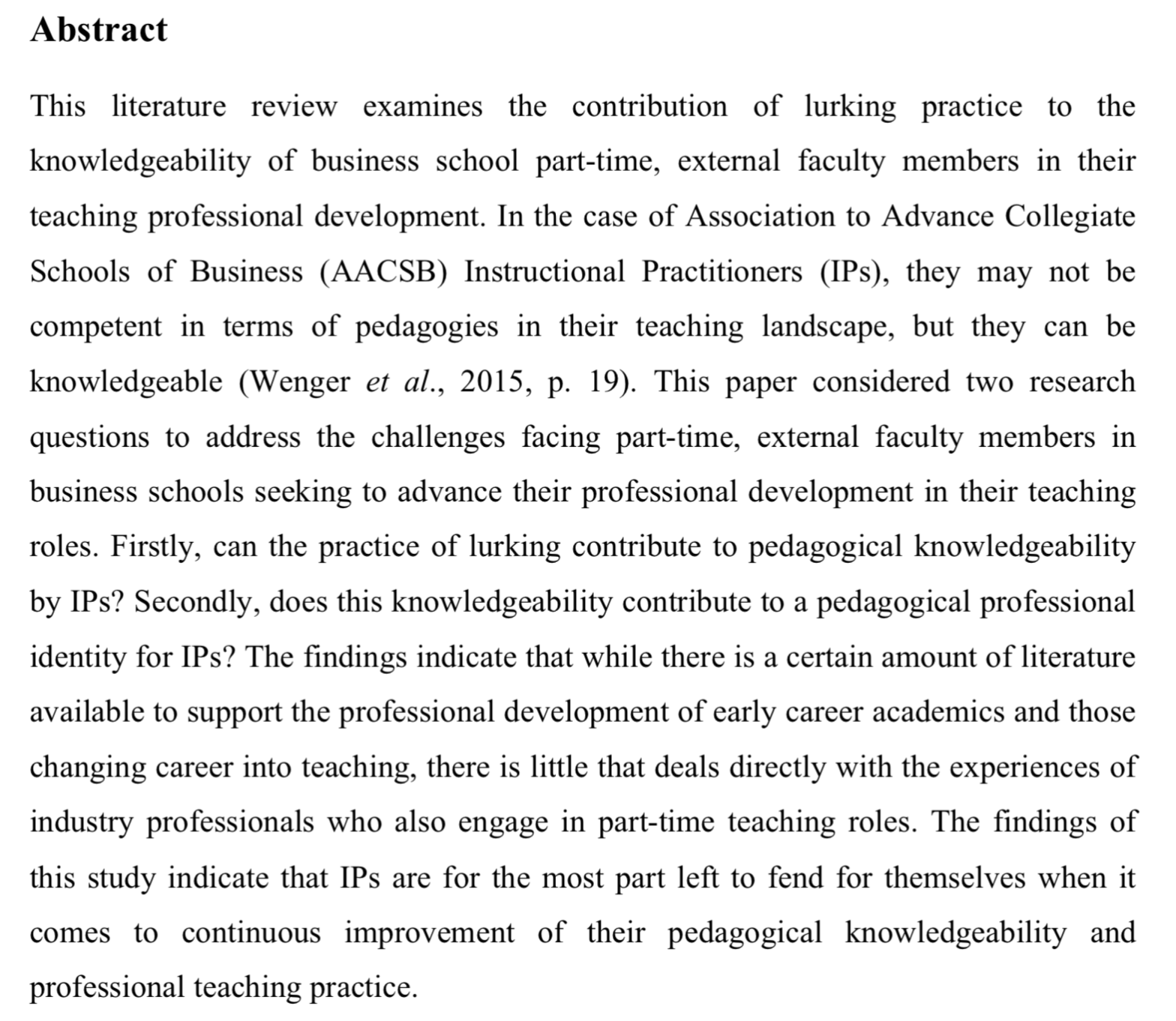
This morning I was thrilled to learn that my Lancaster Module Two paper was accepted for this year’s International Conference on Engaging Pedagogy, scheduled to take place on 13 December next. This is my first time presenting at an educational conference and only my second time ever, the first being my Masters paper at a project management conference way back in 2004.
I was most interested in a comment from one of the reviewers and consider it very timely and appropriate to this week’s homework:
“Author(s) may like to review the National Professional Development Framework for all Staff who Teach in Higher Education, particularly domain 4 which calls on all lecturers to map the way they remain current in their own discipline. This can be through research (for many seasoned academics) or industry practice (for the type of IPs discussed in this paper).“
Domain 4 Professional Knowledge and Skills “ensures the individual remains current in terms of their professional/disciplinary knowledge and can implement teaching, learning and assessment approaches which promote active learning and are underpinned by a strong evidence base.”
The subjects of interest to my paper are, for the most part, full-time industry practitioners who teach on MSc. level project management programmes on a part-time basis. They are knowledgeable in their disciplines through their professional practice but less likely to be so in their pedagogical knowledge and practices. I’m interested in all feedback and ideas from my triad and cohort peers about how to ‘remain current‘ in pedagogy supporting online learners. I find ‘teaching presence’ from the Community of Inquiry framework to be an important area when it comes to student engagement along with the TPACK (technological, pedagogical and content knowledge) framework but I’d love to hear others’ thoughts on this important topic.
Reference:
Garrison, D.R., Anderson, T. & Archer, W., 1999. Critical Inquiry in a Text-Based Environment: Computer Conferencing in Higher Education. The Internet and Higher Education, 2(2), pp.87–105.
 Sandra Flynn